More Than Just Jars: What Sets Bright Glassware, a China Candle Jar Manufacturer, Apart from the Rest
SHENZHEN, GUANGDONG, CHINA, January 21, 2026 /EINPresswire.com/ -- In an increasingly competitive home fragrance and decorative packaging market, one name stands out for its commitment to craftsmanship and trend-setting innovation. Bright Glassware, a premier Candle Jar Manufacturer from China, has officially entered the top tier of global suppliers. With over 20 years of expertise, the company has transformed expectations for custom glass packaging, successfully supplying both emerging boutique labels and multinational brands with high-end borosilicate glass solutions. By merging artistic expression with industrial-grade reliability, Bright Glassware is redefining what it means to be a leader in the global glassware industry.
I. Industry Outlook: Global Shift Toward Premium Home Wellness
The candle jar market has shown steady growth in recent years, driven by several global trends. First, the rise of “self-care” lifestyle has elevated scented candles and home fragrances from simple aroma products to tools for emotional wellbeing and relaxation. Second, home aesthetics have become increasingly important, especially among younger consumers who seek products that can be displayed and shared on social media. Third, environmental awareness has led many brands to prioritize durable and recyclable glass materials over single-use plastics. Fourth, customization has become a key differentiator, with unique shapes, finishes, and brand-specific designs becoming central to market success.
Against this backdrop, supply chain integration, production stability, and customization capabilities are becoming decisive factors in brand procurement decisions. China, as a major global glassware manufacturing base, benefits from a complete industrial chain and scale manufacturing capabilities, which give it an advantage in the global home fragrance and decorative packaging market.
II. Technological Capability: Automation for Consistency and Scale
In the manufacturing of candle jars, product quality and consistency directly affect brand perception and user experience. Bright Glassware’s production technology reflects a focus on “batch consistency.” Its automated spray coloring and surface treatment equipment help reduce manual errors and ensure consistent color and texture across large production runs.
Automation also supports higher production efficiency and shorter lead times, enabling flexible handling of both large export orders and smaller customized batches. This capability is increasingly important in a market where supply chain reliability is a key competitive factor.
In terms of decoration, common techniques such as silk-screen printing, laser engraving, water transfer decals, and electroplating all influence visual impact and cost structure. The variety of decoration methods supported by Bright Glassware indicates its ability to meet brand demands for differentiated packaging. For fragrance brands, such capabilities not only affect time-to-market but also determine whether products can stand out in competitive retail channels.
III. Product Spotlight: The Cambridge Series and Its Market Relevance
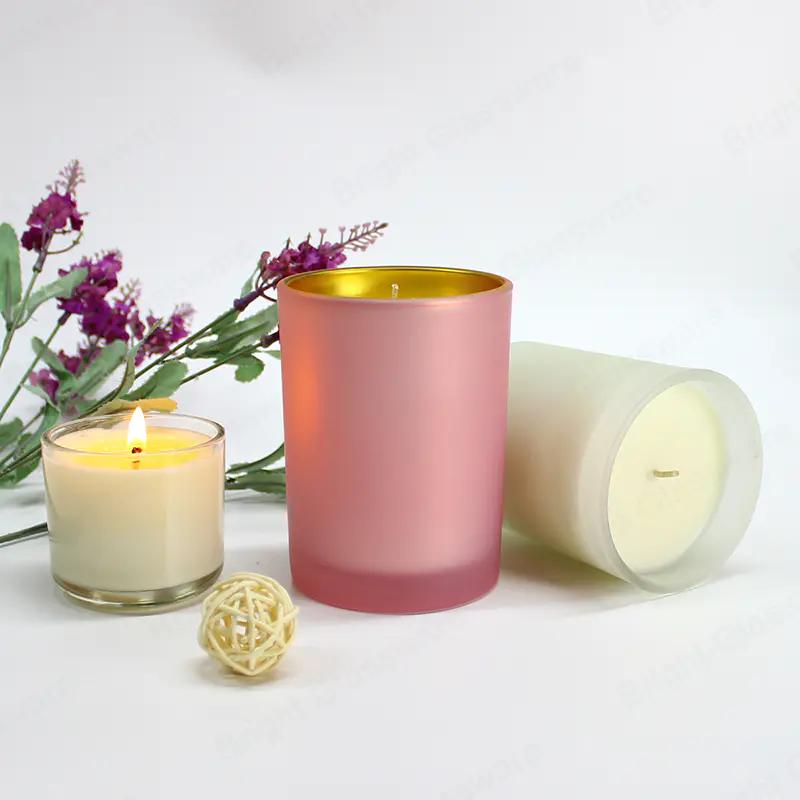
Bright Glassware’s Cambridge series is often cited as a representative example of its design capability. The Luxury Pink Cambridge Medium Hologram Glass Candle Jar demonstrates the use of holographic finishing and customized lids, aligning with current market demand for high visual impact and product differentiation.
From an industry perspective, holographic and plated finishes emphasize “light effects” and “visual appeal,” but also require higher manufacturing stability. In large-scale production, inconsistent results can lead to higher defect rates, increased costs, and longer delivery times. Therefore, the ability to produce such products consistently reflects the maturity of manufacturing technology.
Borosilicate glass, as a material, offers advantages in heat resistance and clarity, but also requires strict control in forming processes, temperature management, and post-processing. Common challenges in the industry include controlling thermal stress, minimizing surface defects, and matching decoration techniques with glass properties. Suppliers capable of controlling these factors are more likely to establish long-term partnerships with brand customers.
IV. Quality System and Compliance: Essential in International Trade
As global markets impose stricter product safety and compliance requirements, manufacturers’ qualifications and testing capabilities have become key procurement criteria. For exporters, providing complete testing data and compliance documents directly affects customs clearance efficiency and market entry.
In this context, transparent certification and testing processes help enhance buyers’ confidence in supply chain stability. For brands, the ability of a supplier to provide traceable quality records and continuous delivery capacity often determines whether it can support product iterations and market expansion.
V. Global Presence: Trade Shows and Strategic Market Expansion
In the global market, a manufacturer’s international influence is often tied to its participation in trade shows, channel partnerships, and overseas customer structure. Industry observers generally consider trade shows not only as product display platforms but also as key venues for building business trust, obtaining orders, and understanding market trends.
Bright Glassware’s participation in major North American trade events demonstrates its ongoing efforts to expand international business. For manufacturing companies, trade shows are also a way to gather feedback on market preferences in style, technology, and materials, which can drive product development and process upgrades.
Its product application scenarios also show cross-industry characteristics, covering home fragrance vessels, reed diffuser bottles, cosmetic jars, and lifestyle storage containers. This cross-category adaptability reflects the wide applicability of glass containers in “premium packaging” and demonstrates the manufacturer’s ability to meet different market demands.
VI. Two Decades of Experience: From Supplier to Collaborative Partner
Over the past 20 years, the competitive landscape of glassware manufacturing has shifted from simple “product supply” to “supply chain collaboration.” Brands now prefer partners that can provide stable delivery, technical support, and continuous improvement. The level of investment in product development, process optimization, and quality control has become a key indicator of long-term cooperation potential.
Industry analysis shows that suppliers with sustained technological investment and scale capabilities are more likely to maintain stable orders and customer relationships amid market fluctuations. For brands, such partnerships help reduce supply risks, improve product consistency, and support stable retail performance.
Conclusion
Overall, the current home fragrance and decorative packaging market has moved from functional requirements toward brand expression and consumer experience. Manufacturers’ capabilities in technology, craftsmanship, quality systems, and international market presence determine their position in the global supply chain. As customization and sustainability become increasingly emphasized, manufacturing maturity and supply chain management will continue to shape industry competition and brand procurement decisions.
I. Industry Outlook: Global Shift Toward Premium Home Wellness
The candle jar market has shown steady growth in recent years, driven by several global trends. First, the rise of “self-care” lifestyle has elevated scented candles and home fragrances from simple aroma products to tools for emotional wellbeing and relaxation. Second, home aesthetics have become increasingly important, especially among younger consumers who seek products that can be displayed and shared on social media. Third, environmental awareness has led many brands to prioritize durable and recyclable glass materials over single-use plastics. Fourth, customization has become a key differentiator, with unique shapes, finishes, and brand-specific designs becoming central to market success.
Against this backdrop, supply chain integration, production stability, and customization capabilities are becoming decisive factors in brand procurement decisions. China, as a major global glassware manufacturing base, benefits from a complete industrial chain and scale manufacturing capabilities, which give it an advantage in the global home fragrance and decorative packaging market.
II. Technological Capability: Automation for Consistency and Scale
In the manufacturing of candle jars, product quality and consistency directly affect brand perception and user experience. Bright Glassware’s production technology reflects a focus on “batch consistency.” Its automated spray coloring and surface treatment equipment help reduce manual errors and ensure consistent color and texture across large production runs.
Automation also supports higher production efficiency and shorter lead times, enabling flexible handling of both large export orders and smaller customized batches. This capability is increasingly important in a market where supply chain reliability is a key competitive factor.
In terms of decoration, common techniques such as silk-screen printing, laser engraving, water transfer decals, and electroplating all influence visual impact and cost structure. The variety of decoration methods supported by Bright Glassware indicates its ability to meet brand demands for differentiated packaging. For fragrance brands, such capabilities not only affect time-to-market but also determine whether products can stand out in competitive retail channels.
III. Product Spotlight: The Cambridge Series and Its Market Relevance
Bright Glassware’s Cambridge series is often cited as a representative example of its design capability. The Luxury Pink Cambridge Medium Hologram Glass Candle Jar demonstrates the use of holographic finishing and customized lids, aligning with current market demand for high visual impact and product differentiation.
From an industry perspective, holographic and plated finishes emphasize “light effects” and “visual appeal,” but also require higher manufacturing stability. In large-scale production, inconsistent results can lead to higher defect rates, increased costs, and longer delivery times. Therefore, the ability to produce such products consistently reflects the maturity of manufacturing technology.
Borosilicate glass, as a material, offers advantages in heat resistance and clarity, but also requires strict control in forming processes, temperature management, and post-processing. Common challenges in the industry include controlling thermal stress, minimizing surface defects, and matching decoration techniques with glass properties. Suppliers capable of controlling these factors are more likely to establish long-term partnerships with brand customers.
IV. Quality System and Compliance: Essential in International Trade
As global markets impose stricter product safety and compliance requirements, manufacturers’ qualifications and testing capabilities have become key procurement criteria. For exporters, providing complete testing data and compliance documents directly affects customs clearance efficiency and market entry.
In this context, transparent certification and testing processes help enhance buyers’ confidence in supply chain stability. For brands, the ability of a supplier to provide traceable quality records and continuous delivery capacity often determines whether it can support product iterations and market expansion.
V. Global Presence: Trade Shows and Strategic Market Expansion
In the global market, a manufacturer’s international influence is often tied to its participation in trade shows, channel partnerships, and overseas customer structure. Industry observers generally consider trade shows not only as product display platforms but also as key venues for building business trust, obtaining orders, and understanding market trends.
Bright Glassware’s participation in major North American trade events demonstrates its ongoing efforts to expand international business. For manufacturing companies, trade shows are also a way to gather feedback on market preferences in style, technology, and materials, which can drive product development and process upgrades.
Its product application scenarios also show cross-industry characteristics, covering home fragrance vessels, reed diffuser bottles, cosmetic jars, and lifestyle storage containers. This cross-category adaptability reflects the wide applicability of glass containers in “premium packaging” and demonstrates the manufacturer’s ability to meet different market demands.
VI. Two Decades of Experience: From Supplier to Collaborative Partner
Over the past 20 years, the competitive landscape of glassware manufacturing has shifted from simple “product supply” to “supply chain collaboration.” Brands now prefer partners that can provide stable delivery, technical support, and continuous improvement. The level of investment in product development, process optimization, and quality control has become a key indicator of long-term cooperation potential.
Industry analysis shows that suppliers with sustained technological investment and scale capabilities are more likely to maintain stable orders and customer relationships amid market fluctuations. For brands, such partnerships help reduce supply risks, improve product consistency, and support stable retail performance.
Conclusion
Overall, the current home fragrance and decorative packaging market has moved from functional requirements toward brand expression and consumer experience. Manufacturers’ capabilities in technology, craftsmanship, quality systems, and international market presence determine their position in the global supply chain. As customization and sustainability become increasingly emphasized, manufacturing maturity and supply chain management will continue to shape industry competition and brand procurement decisions.
Shenzhen Bright Glassware Co., Ltd,
+86 755 2802 5877
peaky@brightglassware.com
Legal Disclaimer:
EIN Presswire provides this news content "as is" without warranty of any kind. We do not accept any responsibility or liability for the accuracy, content, images, videos, licenses, completeness, legality, or reliability of the information contained in this article. If you have any complaints or copyright issues related to this article, kindly contact the author above.